
Specialties Breathing
Breathing, the gateway to the whole body
Breathing is one of the few physiological functions that are both fully automatic and voluntarily controllable. Daniel Bontems has made it his field of choice since his sport sciences (STAPS) years: the neuroscience of breathing, CO₂ and O₂ biochemistry, micronutrition, and techniques drawn from the great traditions.
He works with functional breathing and ENT disorders from infants to older adults, as a complement to ENT medical follow-up where there is one.
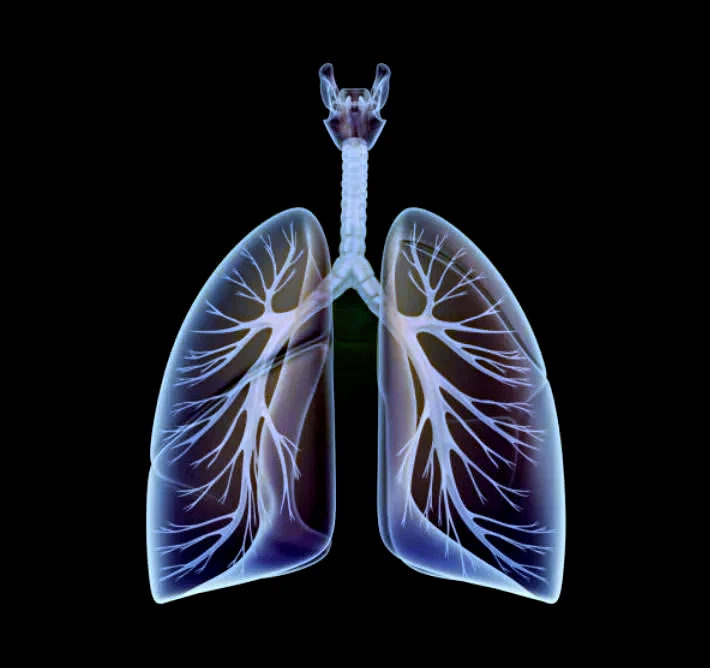
Five seconds to breathe in, five to breathe out: six breaths a minute, the rhythm of cardiac coherence. The lungs descend with the diaphragm and widen with the ribs.
From the jaw to the foot
The way we breathe influences the position of the jaw and the pelvic floor, and then how the knee and foot bear weight.
Daniel Bontems studies this five-link chain, still little described in the literature, and uses it in his assessment.
In the field
In 2012, at Clairefontaine, with the French women's national football team, he applied his breathing optimisation protocols on a large scale for the first time. In 2022, he turned them into a 367-slide course based on around 800 references, taught over three days in Lausanne.
- Jawocclusion, bruxism, tongue position
- Breathingdiaphragm, breathing pattern, rib cage
- Perineumpelvic floor, pelvis
- Kneelower-limb alignment, weight-bearing
- Footarches, ground contact
The chain can be read in both directions: a strain can travel down from the jaw to the foot, or up from the foot to the jaw.
From infants to executives
Infants and children
Chronic ENT problems, mouth breathing, snoring, apnoea: early detection, in liaison with the paediatrician and the ENT specialist.
Babies and childrenAdolescents
Links between breathing, posture, the spine, chronic fatigue and performance at school and in sport.
Elite athletes
VO₂, CO₂ tolerance, respiratory recovery protocols, tailored to the discipline.
Premium programmeSingers and speakers
Opera singers, speakers and voice professionals: breath support.
Older people
Breathing, neurocognitive disorders and maintaining independence.
Executives and senior leaders
Breathing as a tool for stress management, cognitive performance and recovery.
Premium programmeHealth and sport professionals
Bontems Method Breathing: Daniel Bontems’s two courses.
Online trainingBreathing and osteopathy
Another question? Write to the practice
Can an osteopath have an effect on breathing?
Osteopathy looks at the structures that determine breathing mechanics: the diaphragm, rib cage, spine and craniofacial region. It is combined with educational work on the breathing pattern. The approach is functional and complements the opinion of an ENT specialist or respiratory physician when a medical condition is involved.
How does it differ from cardiac coherence or the Wim Hof method?
These are breathing techniques among others, each with its own indications and limitations. Cardiac coherence slows the breathing rate to support the balance of the autonomic nervous system; the Wim Hof method combines controlled hyperventilation with cold exposure, and is not suitable for everyone.
The approach taken by Daniel Bontems is first to assess the person's breathing profile, then to choose the appropriate technique, rather than applying a single method. Heart rate variability (HRV) can inform this choice: it is a useful indicator of the state of the autonomic nervous system, not an absolute truth.
What is mouth breathing and why is it a problem?
It means breathing through the mouth at rest, outside of physical exertion. In children, it is associated with effects on sleep, facial growth and posture. Recognising it early allows appropriate referral, particularly to an ENT specialist or an orthodontist.
Is this support offered at both practices?
Yes, in Neuilly-sur-Seine and in Aix-en-Provence alike.